Two bars can both call themselves protein bars and aim at opposite goals. One packs the most protein into the fewest calories. The other is built around foods you can name.
Blueprint Macadamia Protein Bar is the second kind, a 40 g nut bar with 9 g of pea protein. David Protein Bar, in its Gold line, is the first kind, a 62 g bar with 28 g of protein in 150 calories.
This article compares the two labels and the two prices. It is label and pricing research, not a hands on review. I have not tested either product, and nothing here is sponsored.
The short version: David Gold wins the protein math by a lot. It gives 28 g of protein for 150 calories, at about $0.116 per gram of protein. Blueprint gives 9 g for 160 calories, at about $0.269 per gram. Blueprint costs less per bar, at $2.42 against $3.25, and its case rests on ingredients. The list is short, the sweetener is allulose, and the bar is vegan. David uses protein isolates, sugar alcohols, artificial sweeteners, and a modified fat called EPG. Prices are as of November 2026. If you are new to Blueprint, you can get $50 off your first Blueprint order through this referral link, which is more than the price of a pack.
The Biggest Trap: Judging a Bar on One Number Alone
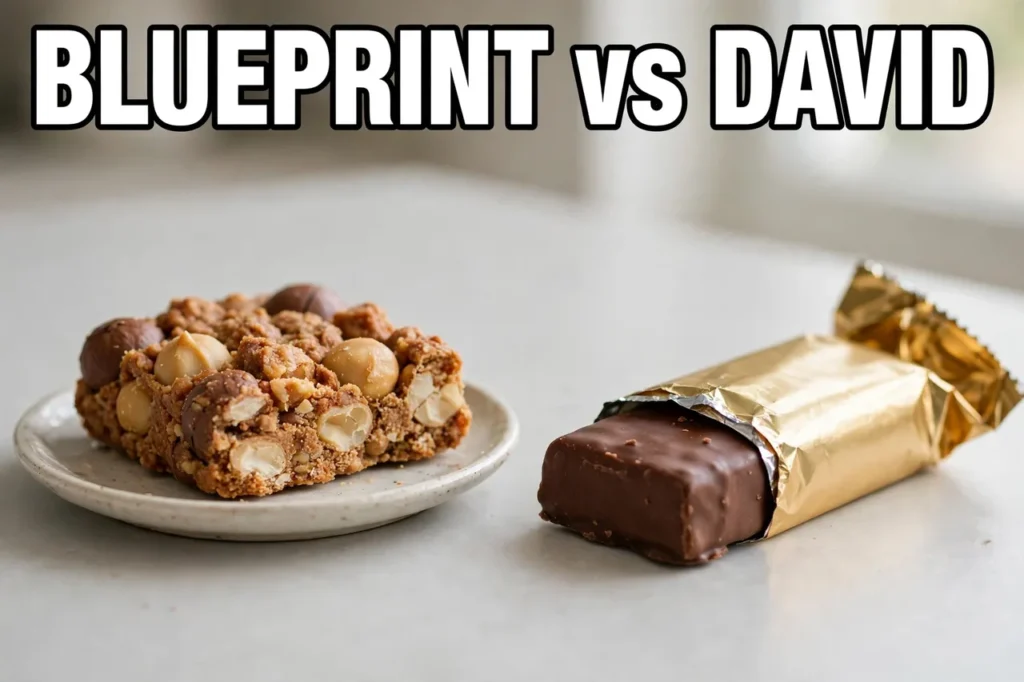
Judge on protein grams alone and David wins before the discussion starts. Judge on the ingredient list alone and Blueprint wins just as fast. Both shortcuts miss what each bar was built to do.
David Gold is engineered for protein density. Protein goes up. Fat and sugar go down. Calories stay at 150. Blueprint is built the other way. It starts with nuts and cocoa butter and adds enough pea protein to use the name. Fat is not the problem to solve. Fat is most of the point.
The EPG ingredient shows the gap in one line. David holds its fat at 2 g to 2.5 g with a modified plant fat listed as EPG. The amount in each bar is not printed on the label. A human study of EPG neither condemns nor clears the bar, and a later section covers what it does and does not show.
The Two Labels, Side by Side
Amounts are per bar, as printed on the current labels. The David column is the Gold line only. None of the figures below come from the Bronze line.
| Per bar | Blueprint Macadamia Protein Bar | David Protein Bar, Gold |
|---|---|---|
| Bar weight | 40 g | 62 g |
| Calories | 160 | 150 |
| Protein | 9 g | 28 g |
| Total fat | 11 g | 2 g to 2.5 g by flavor |
| Total carbohydrate | 5 g | 12 g |
| Fiber | 1 g | 1 to 2 g by flavor |
| Total sugars | 1 g, 0 g added | 0 g, 0 g added |
| Sweeteners | Allulose | Maltitol, allulose, sucralose, acesulfame potassium |
| Protein source | Pea protein | Milk protein isolate, collagen, whey protein concentrate, egg white |
| Vegan | Yes | No |
| Gluten free | Yes | Yes |
| Flavors | White Cocoa Butter, Raspberry; Lemon in the variety pack | Eight core flavors |
| Pack price | $29 for 12 bars | $39 for 12 bars |
| Price per bar | $2.42 | $3.25 |
Two details deserve a plain statement. First, size explains part of the price gap. The David bar weighs 62 g and the Blueprint bar weighs 40 g, and the per bar prices reflect that.
Second, two rows are near draws. Sugar is 1 g for Blueprint and 0 g for David. Fiber is 1 g and 1 to 2 g. Neither bar is a fiber bar.
The Cost Math That Matters
A protein bar is bought for protein, so cost per gram of protein is the honest figure. Blueprint works out to $2.42 divided by 9 g, or $0.269 per gram. David works out to $3.25 divided by 28 g, or $0.116 per gram, less than half the Blueprint cost.
Protein per calorie tells the same story. Blueprint gives 5.6 g of protein per 100 calories. David gives 18.7 g. Protein provides 22.5 percent of Blueprint calories and 75 percent of David calories.
Per bar is the one figure Blueprint wins, at $2.42 against $3.25. Subscription pricing changes neither order. David drops to $2.93 per bar, or $0.105 per gram. Blueprint autoship drops to about $2.30 per bar and $0.255 per gram.
For a first time Blueprint buyer, the referral credit is the largest saving on this page. You can claim $50 off your first Blueprint order with a referral link, and the credit is larger than the $29 pack. No code is needed.
Where Blueprint Makes Its Case: The Ingredient List
The Blueprint label reads like food because it mostly is food. Pea protein crisps come first. Macadamia nuts come second. Then chicory fiber, allulose, and a bottom coating of cocoa butter, allulose, inulin, sunflower lecithin, and sea salt. Macadamia oil, sea salt, and natural flavor finish the list.
The sweetener system is one item long. Allulose is the whole system. There are no artificial sweeteners and no sugar alcohols. The bar is vegan and dairy free, and it costs less per bar.
That summary is all this page needs to print. The full list in label order and the full panel are in my Blueprint Macadamia Protein Bar ingredients breakdown.
The honest limit belongs here too. Nine grams of protein is low for this category, and the 11 g of fat means most Blueprint calories arrive as fat. Buy this bar for what is in it, not as a protein delivery tool.
The David System and the EPG Question
David reads like a system because it is one. The protein system blends milk protein isolate, collagen, whey protein concentrate, and egg white. The binding system uses maltitol, allulose, glycerin, soluble corn fiber, and tapioca starch. The flavor system uses sucralose and acesulfame potassium, with natural and artificial flavor. The fat system is a modified plant fat listed as EPG, alone in Salted Peanut Butter and with palm kernel oil or coconut oil in other flavors.
EPG is short for esterified propoxylated glycerol, a modified plant fat used in place of regular fat. A human tolerance study of EPG published in Regulatory Toxicology and Pharmacology raised daily intakes from 30 g to 150 g on single days. Effects at 60 g and above were judged possibly adaptive and not clinically significant, and expected food use was about 20 g a day or less.
David does not print the EPG amount in a bar, and that fact limits what anyone can claim. The study cannot condemn this bar, because the bar dose is unknown and the study doses were far larger. It cannot clear the bar either. EPG is a studied fat replacer with an undisclosed dose in this product.
Protein targets put the David number in fair context. The NIH Office of Dietary Supplements fact sheet on exercise and athletic performance puts athlete needs at 1.2 to 2.0 g per kilogram of body weight per day, and notes that food alone can usually cover it. Protein per calorie is a fair metric. Neither bar is required to reach the target.
Which Buyer Each Label Fits
Pick David Gold if protein is the decision. It gives 28 g of protein in 150 calories, at the lowest cost per gram, across eight core flavors.
Pick Blueprint Macadamia Protein Bar if the ingredient list is the decision. It gives a short list of named foods, one sweetener, no artificial sweeteners, and a vegan bar at a lower price per bar. You accept 9 g of protein as the trade.
What to Look For on Any Protein Bar Label
- Protein per 100 calories, not protein grams alone.
- Cost per gram of protein, from the pack price and the bars in the pack.
- Bar weight, since a cheaper bar can simply be a smaller bar.
- The full sweetener list, including any artificial sweeteners or sugar alcohols.
- Any ingredient with no amount printed, such as a modified fat.
- The protein source, and whether it fits how you eat.
Frequently Asked Questions
Which bar has more protein?
David Gold, and it is not close. A David Gold bar gives 28 g of protein in 150 calories. A Blueprint bar gives 9 g in 160 calories. Per 100 calories, David gives 18.7 g against 5.6 g.
Which bar is cheaper?
Blueprint per bar, and David per gram of protein. A Blueprint bar costs $2.42 and a David Gold bar costs $3.25. Per gram of protein, David costs $0.116 and Blueprint costs $0.269, at one time prices as of November 2026.
Is this the David Gold line or the Bronze line?
Gold. Every David figure here comes from the Gold line, at 28 g of protein and 150 calories. Bronze is a separate range at 20 g of protein, and none of its figures are used here.
What is EPG in David bars?
EPG is esterified propoxylated glycerol, a modified plant fat that David lists in place of regular fat. Its amount per bar is not disclosed. A human tolerance study tested far larger daily amounts, and effects at 60 g and above were judged possibly adaptive and not clinically significant.
Is the Blueprint bar vegan?
Yes. Its protein is pea protein, with no dairy and no egg. David Gold is not vegan. It uses milk protein isolate, whey protein concentrate, collagen, and egg white.
The Bottom Line
David Gold wins the protein math by a lot, with about three times the protein per calorie at less than half the cost per gram. Blueprint wins the ingredient argument, with a short list of named foods, one sweetener, and a vegan bar that costs less per bar.
If the question was protein, the answer is David. If the question was ingredients, the answer is Blueprint.
If the Blueprint label is the one that fits, you can get $50 off your first Blueprint order here and put the credit toward your first pack.
Related reading: